Recycled Water Reservoirs
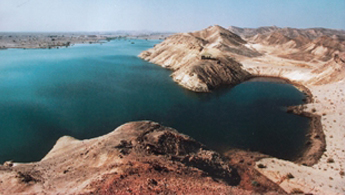
An important method for addressing Israel’s water shortage is utilizing high-quality recycled water for agriculture in place of scarce and expensive freshwater. JNF has constructed more than 220 reservoirs throughout Israel over the past two decades, which serve as the final stage in the water treatment process and hold a total of 66 billion gallons of recycled water and flood runoff for agricultural use. These reservoirs increase Israel’s water supply by 12%, providing almost half of the water used by the agricultural sector and saving the equivalent amount of freshwater for 4.4 million people a year. As farmers face quotas, rising water prices, and low precipitation levels, many rely on JNF reservoirs to keep their fields from going dry. Click here to read about the famers affected by the water crisis.
Seventy-five percent of the sewage water in Israel is recycled and reused, the highest rate in the world. Spain comes in second, recycling just 13% of its wastewater, and U.S. figures are well under 10%. Even so, some treated water in Israel is not reused simply because there are not enough reservoirs for storage. Israel has set a goal of recycling 95% of its wastewater by 2020, making continued reservoir construction vital.
The JNF Parsons Water Fund’s most recent reservoirs are:
The Sderot-Or Haner Reservoirs – Located in the northwest Negev, these two recycled water reservoirs have a combined capacity of more than 435 million gallons. They are linked by a piping system and together provide water to farming communities along Israel’s border with Gaza.
The Beit Guvrin Reservoir – This reservoir holds 132 million gallons of recycled water, which is used to irrigate 275 acres of almond groves at Kibbutz Beit Guvrin in central Israel.
Water Treatment and Recycling
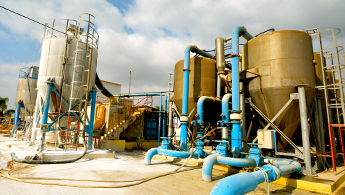
Treatment of wastewater to at least the tertiary level allows it to be used for agricultural irrigation, thereby freeing up drinking water previously used for that purpose. In addition to providing a reliable water supply, treating wastewater prevents pollution of aquifers, streams, and soil. The JNF Parsons Water Fund assists local and regional councils in Israel in upgrading their existing water treatment systems and has begun to implement cutting-edge, environmentally friendly recycling technologies like constructed wetlands.
Constructed Wetlands at the Ramon Air Force Base
The Ramon Air Force Base, located in the heart of the Negev Desert, is home to more than 3,000 Air Force personnel and their families. Because of its remote location, it is not served by Israel’s main sewage system, and until recently treated its wastewater in an inefficient manner that posed an ecological hazard.
To address this problem, the JNF Parsons Water Fund supported the establishment of a constructed wetlands system at the base. An innovative method for purifying wastewater that duplicates the biofiltration processes of natural wetlands, constructed wetlands are considerably cheaper and easier to maintain than conventional alternatives and require much less energy to operate. In addition to controlling pollution, the wetlands at the Ramon Air Force Base will provide 80 million gallons of recycled water a year, which will be used to irrigate nearby farms as well as the 7.5 acre park created by JNF for the families of the base through the Essence of Life campaign. They will serve as a model for efficient water treatment and reuse throughout Israel.
Arara Water Treatment Center Upgrade
The JNF Parsons Water Fund is upgrading the water treatment center in Arara, a Bedouin municipality in the Negev. Once operational, it will effectively deal with the town’s wastewater as well as effluents from the nearby Nevatim Air Force Base, the fastest growing IDF base. The IDF will pay the Arara municipality for use of the recycling plant, providing an economic benefit to this impoverished community. Water will be treated to the tertiary level and stored in a reservoir. From there, it will be allocated to farming communities in the area as well as for a variety of water attractions in the Be’er Sheva River Park, the metropolitan park of the Negev.
Accessing an Untapped Water Resource
The JNF Parsons Water Fund has partnered with the Israeli Water Authority and agricultural associations in northern Israel to access a unique new groundwater resource near Kiryat Shemona and Kibbutz Shamir. The project, known as the Shamir Drillings, is the largest exploitation of natural underground water resources in the past decade, designed to add 1.5% to Israel’s annual water economy.
An estimated six billion gallons of water a year will be extracted from three drill sites reaching a depth of 4,500 feet. The ability to access such deep water is the result of technological advances developed for the oil industry. Only a few water-strapped countries have ever utilized this method for water. Water from the Shamir Drillings will be supplied year-round to farmers in the northeastern Galilee and Golan Heights, replacing the freshwater currently drawn from the Jordan River for irrigation and helping to replenish the critically low level of the Kinneret, into which the Jordan flows. Because the drills will supply a reliable, even, and plentiful water flow throughout the year, farmers will be able to grown multi-season crops and not only (or primarily) winter crops. Water from the Shamir Drillings will also be used for fish farming and tourism purposes.
Advocacy and Education
JNF supports educational programs in Israel and the U.S. to raise awareness about the water crisis, promote conservation, and help students develop skills to address environmental challenges.
Rainwater Harvesting
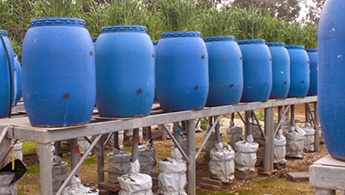
In schools throughout Israel, JNF’s rainwater harvesting program substantially reduces freshwater consumption and gives young students the tools to deal with water issues in the future. The innovative program was developed by an Israeli teacher as a practical way to save water as well as a hands-on means of educating students about conservation and encouraging scientific curiosity. A tank system on school grounds collects rain during the winter months and supplies water for toilet flushing, cleaning, and irrigation—up to 95% of the school’s water needs. A complementary educational program, led by senior guides from the Green Horizons youth movement, teaches children about the water crisis in Israel, how it concerns them, and what they can do to make a difference. The impact is felt far beyond school walls, with students bringing the message of conservation home to their families and communities. To date, the JNF Parsons Water Fund has implemented this program in 22 schools.
World Water Monitoring Day
In the U.S., JNF sponsors World Water Monitoring Day™, an international education and outreach program that builds public awareness and involvement in protecting water resources around the world by engaging citizens to conduct basic monitoring of their local water bodies.
River Rehabilitation
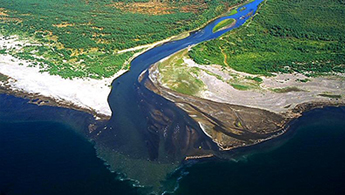
With few exceptions, nearly all of the rivers and streams in Israel have either dried up because of the water shortage or become severely polluted. In 1993, JNF and Israel’s Ministry of the Environment created the National River Administration, the coordinating body for more than 15 governmental ministries, non-profits, and research organizations charged with overseeing the restoration of Israel’s rivers. This involves reducing pollution, rehabilitating ecosystems, regulating channels to conduct floodwaters, and promoting river recreation, tourism, education and research. More than a dozen rivers and streams in Israel have already benefited from JNF’s efforts.
JNF’s work in the area of river rehabilitation was recognized in 2003 with an international prize from the prestigious Australian River-Price Competition for its restoration of the Alexander River, a severely polluted 20-mile stream that runs through Jewish and Arab towns. The project was cited for the thoroughness of the plan and the cooperation between Israel and the Palestinian Authority, and was featured in the New York Times.
Current projects include the restoration of the Be’er Sheva River as part of the 1,300-acre Be’er Sheva River Park.
Get involved and Donate to Water Projects . For naming opportunities call your local office at 888-JNF-0099.