
FROM B’YACHAD MAGAZINE
Growing Up With GrooveTech
How a technology education center on the border with Gaza is shaping the next generation of Israeli innovators, with the help of Jewish National Fund-USA.
Current Cover Story
At 13 years old, Ben Edri is already fluent in a language most adults never learn. A seventh grader from Moshav Yevul in the Eshkol Regional Council, which sits on the Gaza border in southern Israel, he operates industrial machines, designs and prints 3D models, and builds working mechanisms that stump engineers.
He did not learn this in school.
For six years, Ben’s afternoons have belonged to GrooveTech—a state-of-the-art safe science and technology center just two miles from the Gaza border, built by Jewish National Fund-USA with generous support from Peter and Betsy Fischer, and Jentezen Franklin Media Ministries.
Ben is what GrooveTech Director Shani Medina calls a “GrooveKid,” a child for whom the center has become a second home.
Serving children and teens across the Eshkol region, GrooveTech is far more than an after-school program. A center unlike any other in the world, it offers something rare: not just a safe place to learn, but a place to belong—and the tools to build a future.
The GrooveKid Who Found His Place
Ben was seven years old when he first walked into GrooveTech.
“I remember that everything looked advanced,” he says. “It felt like a different world.”
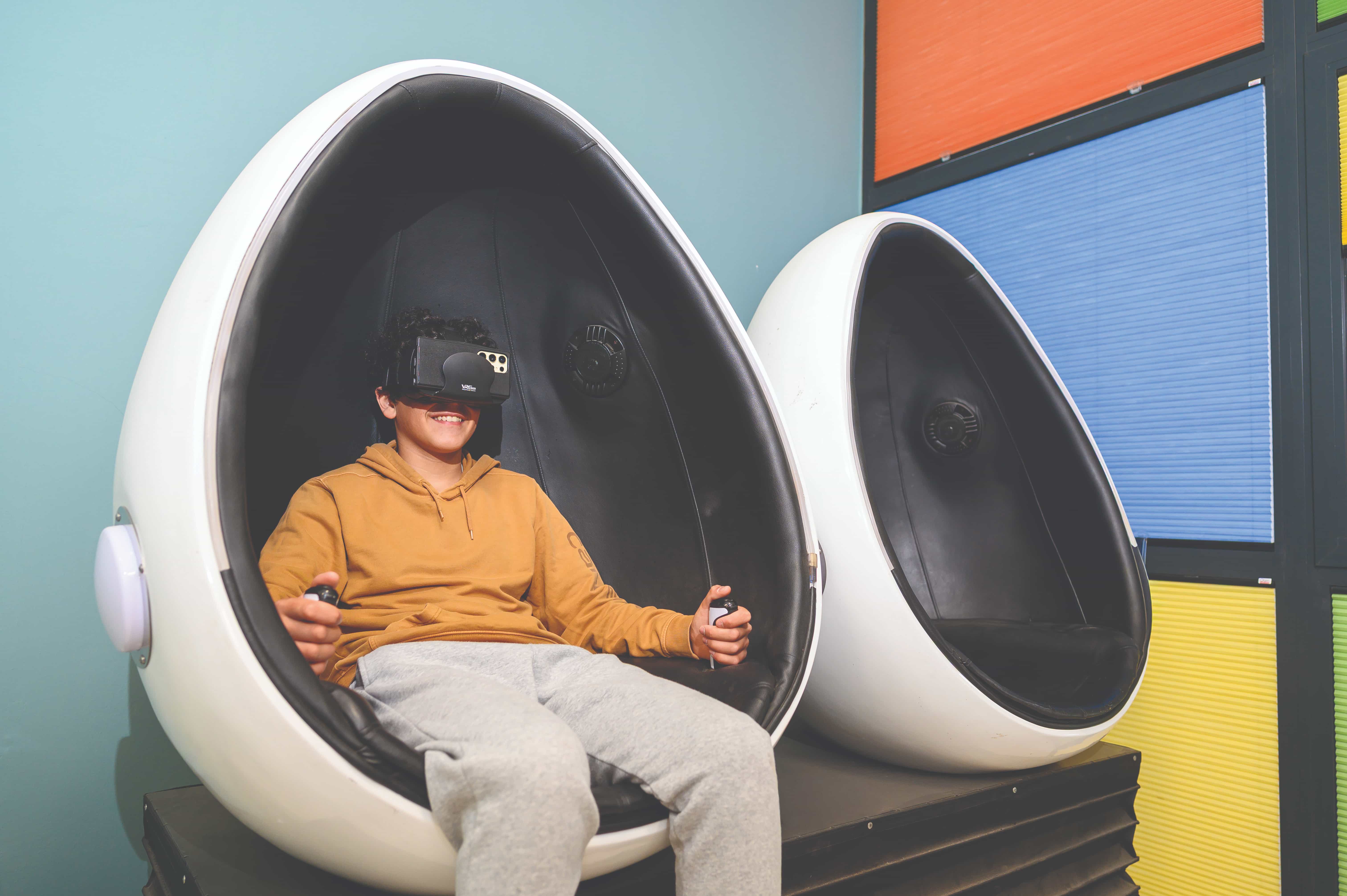
Every day after school, Ben joined the steady rhythm of students moving between hands-on workshops and programs in science, technology, engineering, and math (STEM). Inside the two-story facility, everything felt cutting-edge—from the cybertech lab and professional teaching kitchen to the planetarium and immersive virtual reality arena.
He quickly formed friendships with his peers, gathering in the center’s safe indoor playground and social rooms. For the first time, he felt a sense of belonging—both in and out of class.
For Ben, school was never easy. Though he has been assessed at a genius level, he has learning difficulties that make traditional classrooms a challenging fit. At GrooveTech, immersed in workshops designed not only to teach practical skills but to help students grow into confident and capable adults, he found a place where he could thrive.
Ben gravitated toward the center’s robotics, mechanics, and bio-agriculture spaces, and it was in the Maker Space program, one of GrooveTech’s most popular tracks, that something clicked. There, he began working with laser cutters, 3D printers, and cutting-edge tools, learning not only traditional workshop skills, but also precision, patience, and the kind of problem-solving that comes from building something that does not work the first time.
“I was exposed to all kinds of machines—advanced and simple,” Ben says. “I realized this field really speaks to me.”
Soon, he was not only building robots, but managing full projects—budgeting, branding, logistics, and presentation.
The lessons extended beyond GrooveTech’s walls. At the AgriTech Center, Ben learned the science behind the rich agriculture of the Eshkol region, using advanced technology to explore growth processes and innovative farming methods. At home, he built a working greenhouse using skills he learned at the AgriTech Center. Today, his family eats vegetables he grows himself.
For Ben—curious, restless, not always suited to conventional classrooms—that kind of exploratory learning environment was life-changing.
“I’m gaining experience in fields I’ll work in as an adult,” he says. “I’m learning software, machines, entrepreneurship, innovative ways of thinking. Things my parents only saw at university. It gives me an advantage.”
Ben’s mother, Porat, marvels at the difference GrooveTech has made in Ben’s life. “GrooveTech has been a lifesaver for my son,” she says. “Thanks to them, he is proud and successful.”
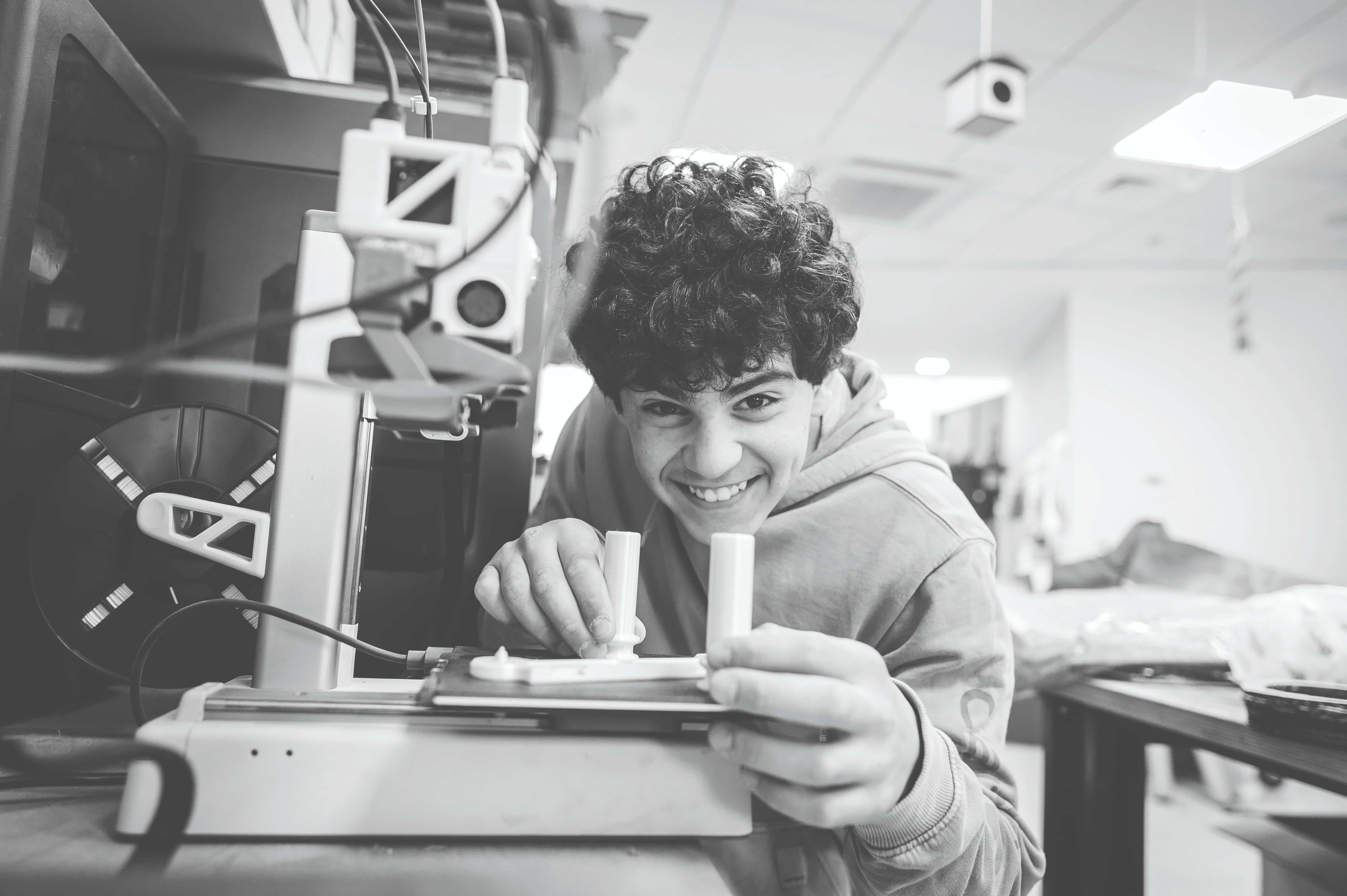
Ben works on a hands-on technology project in the Maker Space program, one of GrooveTech’s most popular tracks (Photo by Ron Rahamim)
Returning Home
By 2023, Ben had spent nearly four formative years growing and learning at GrooveTech.
Then, for a time, it all disappeared.
The Eshkol region absorbed some of the heaviest losses of the October 7 attacks. Families were murdered. Communities were emptied. Thousands were displaced, including Ben and his family, who spent more than a year in temporary housing in Ashkelon, a coastal city about an hour north of their home in Eshkol.
In that time, what Ben missed most was GrooveTech. “It was stability,” Ben says. “A place where I feel at home.”
Ben’s mother searched for something comparable in Ashkelon, but quickly realized there was simply nothing else like GrooveTech.
When the center finally reopened in May 2024, welcoming Ben and his peers back with open arms, the feeling was one of profound relief—a homecoming to a place unlike any other in the world.
In a region that has lived under the threat of rockets for decades, GrooveTech was designed to do more than provide a safe space. It was created to give local children, like Ben, access to world-class technology, innovation, and educational opportunities without leaving home. In doing so, it has become a source of pride for a community determined not merely to endure, but to prosper.
For Jewish National Fund-USA, GrooveTech is part of a larger story—one in which every initiative strategically expands the circles of impact in Israel’s South, driving population growth and helping families return, rebuild, and thrive. GrooveTech is not only about supporting the periphery; it is about helping the periphery set the standard.
Under Shani’s leadership, GrooveTech has grown into a hub for innovation and prestigious global partnerships. The center collaborates with NASA’s Dr. Eliad Peretz on an asteroid identification program, where students analyze telescope data and name successful discoveries. The center also works with the Israel Space Agency, hosting events and featuring cutting-edge exhibitions. GrooveTech recently reached a new milestone when it was designated a public observatory—the first in the region.
“Mayors from other regions tell us they want a GrooveTech for their community,” says Betsy Fischer. To Betsy, that is a testament to the impact of Jewish National Fund-USA’s mission, made possible by the organization’s partners (donors), in creating lasting change for the families living along the Gaza border.
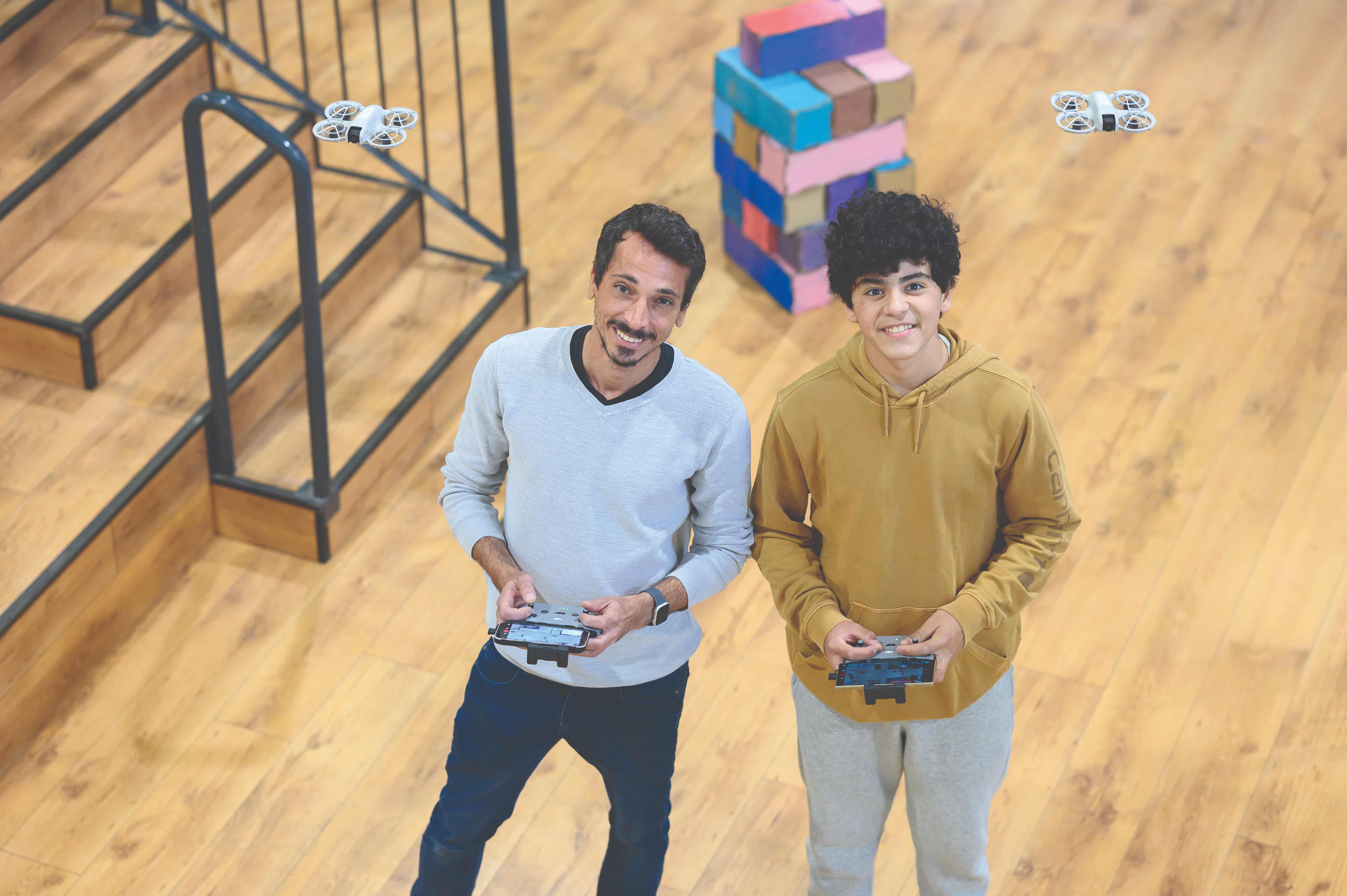
Shani Medina, GrooveTech director (left), and Ben (right) operate drones in GrooveTech’s auditorium (Photo by Ron Rahamim)
A Vision Forward
Shani’s vision for the next five years is to make GrooveTech the central engine for scientific and technological education across the Eshkol region.
“This is our destiny,” he says. “To be the scientific heart of the community.”
In Shani’s view, thanks to Jewish National Fund-USA, the impact goes beyond infrastructure.
“Jewish National Fund-USA isn’t just funding buildings and equipment,” Shani says. “They’re building self-belief. They’re showing these children their future is here—at the forefront of technology.”
Today, Ben continues to learn and grow at GrooveTech, visiting throughout the week to work on projects and beginning an exciting new Maker Space initiative: building remote-controlled cars from scratch and designing his own racing track.
“Ben is exactly the kind of creative mind this mission was built for,” Shani says.
To kids who are unsure of where they might fit, Ben shares advice drawn from his own journey.
“Technology is everywhere, so choose a few activities and try them,” he says. “Keep your mind open. You’ll be surprised by what you discover.”
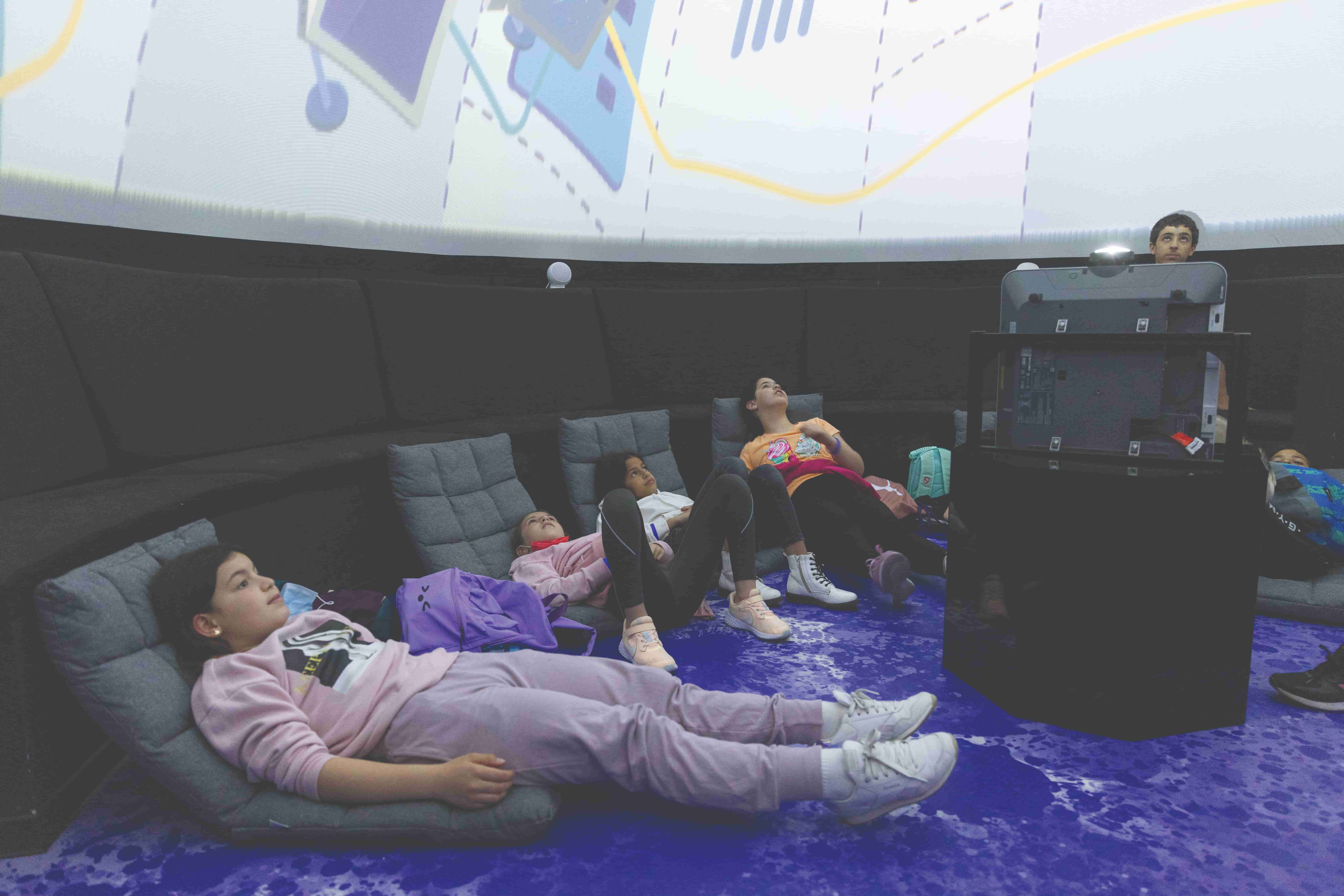
The GrooveTech planetarium
Come visit GrooveTech in the Israel Envelope and see the next generation of Israelis taking shape. Learn more at jnfusa.org/GrooveTech
Step inside GrooveTech in our exclusive YouTube video
 Back
Back