FROM B’YACHAD MAGAZINE
The Infrastructure of Hope
Jewish National Fund-USA’s network of shelters and Emergency Response Centers does more than protect the people of Kiryat Shmona in moments of crisis—it gives them the freedom to stay, build, grow, and call Israel’s North their home.
Featured
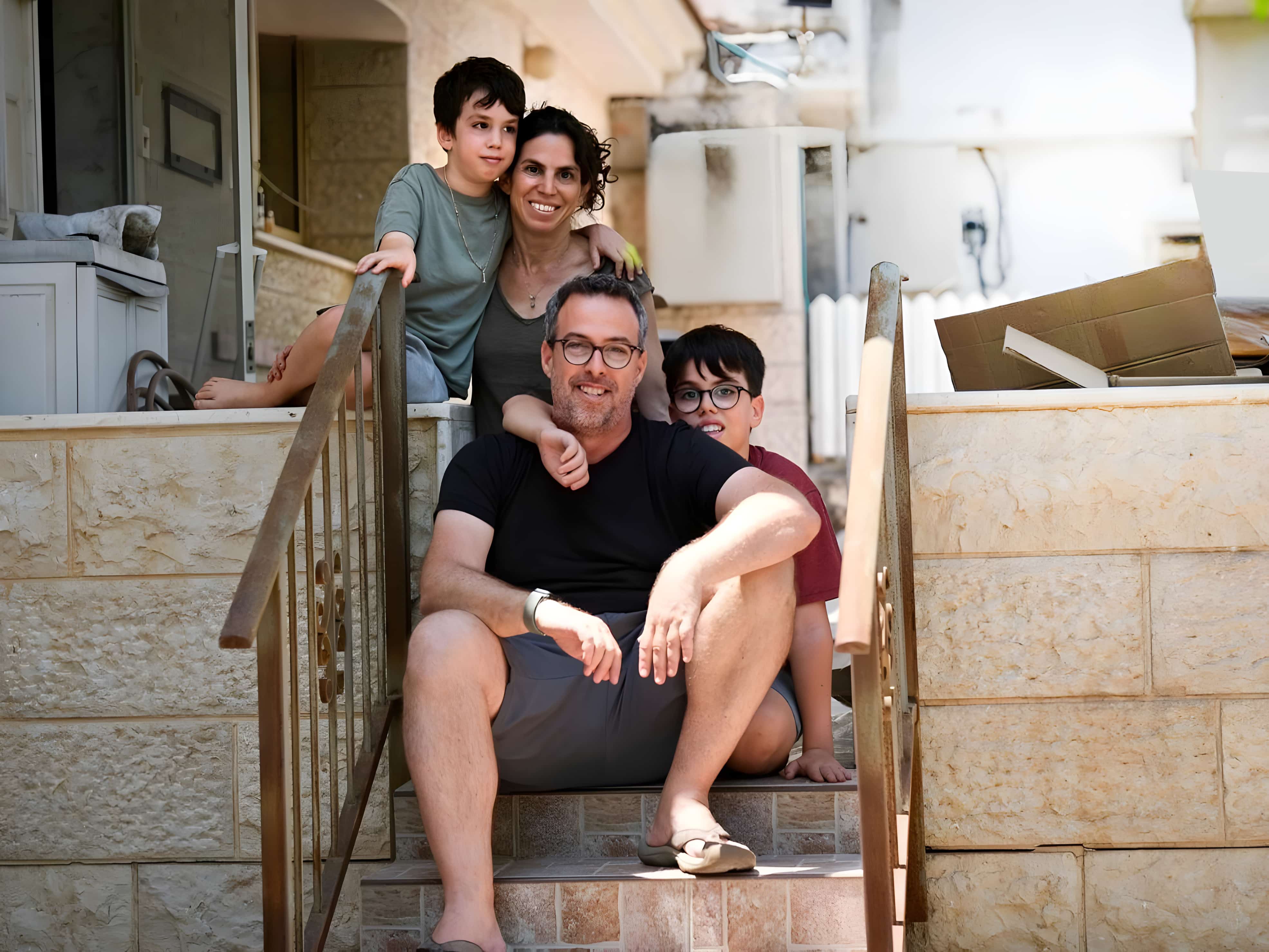
When the sirens pierce the afternoon in Kiryat Shmona, warning of incoming rockets from Lebanon just miles away, Dany Coten does not tell his children to run. He tells them to race.
They know the game well: Whoever reaches the nearest migunit (public bomb shelter) first wins. There is laughter—sometimes genuine, sometimes practiced—as they sprint down the street. Thankfully, the shelters are everywhere, so it is a short race.
“You turn it into something else, because what are you going to do?” Coten says. “You can’t let them feel fear every time.”
When Coten moved with his wife, Aya, and their two sons from Tel Aviv to Israel’s northern community of Kiryat Shmona in August 2025, he did so with a sense of purpose: choosing not only to build his own family’s life in the North, but also to help other families do the same.
Coten works with Jewish National Fund-USA affiliate MAKOM, Israel’s largest national volunteer-based organization, which brings families into existing cities to strengthen communities from within. In Kiryat Shmona, their most ambitious chapter, he is helping lead an effort to bring 300 new families to the city, beginning with a first wave of 15 families who relocated together and are now becoming part of the city’s schools, civic life, businesses, and community initiatives.
To Coten and his family, racing to and from the shelters has become routine. They move with the practiced calm of people accustomed to living alongside danger—an unsettling reality, but also proof that the system is working as it should.
“The bomb shelters are what let people go about their lives,” says Coten. “You know that if a siren goes off, there is somewhere to go.”
This is at the heart of Jewish National Fund-USA’s mission. The organization’s funding of public bomb shelters, mamadim (personal safe rooms), Emergency Response Centers (ERCs), and fire-and-rescue equipment does more than save lives in moments of crisis—it helps make daily life possible. It is the framework that enables families to remain in Israel’s North and South, rebuild with dignity, and maintain a fragile but vital sense of normalcy.
“Jewish National Fund-USA’s infrastructure is the foundation that makes it possible for families to be here at all,” Coten says. “Without it, the conversation doesn’t even start.”
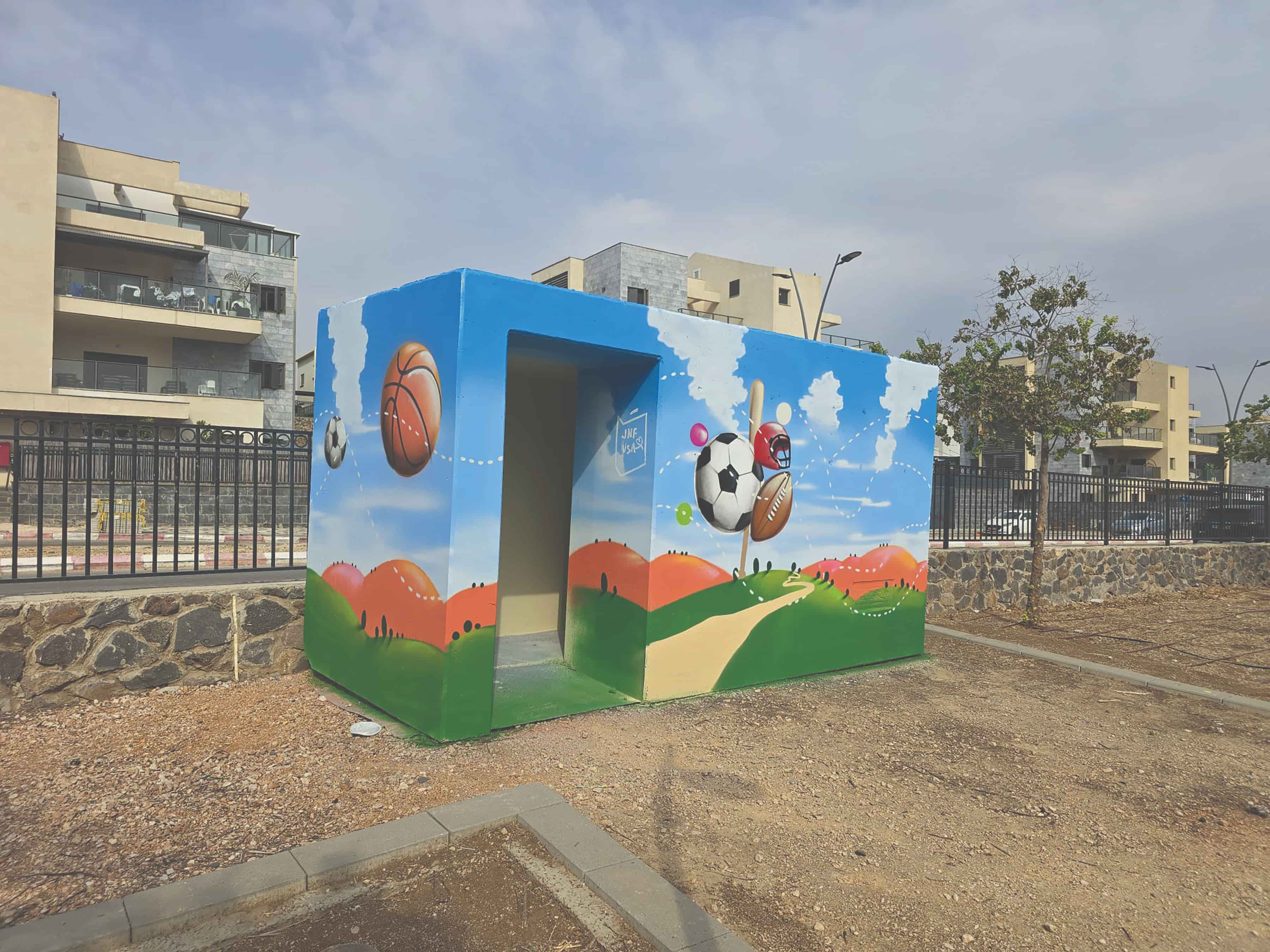
A Jewish National Fund-USA bomb shelter in Kiryat Shmona
THE 70 PERCENT PROBLEM
Kiryat Shmona faces a stark reality: Approximately 70% of private homes and apartments do not have a mamad (reinforced safe room built into the house).
“It’s not unheard of for a young mother living on the second floor to have to grab her two children and run downstairs to the public shelter every time there’s a siren,” says Coten. “Now imagine doing that multiple times, day and night.”
Even for those who do have a safe room at home, life does not happen in one place. Parents run errands. Children play outside. When a siren sounds, what matters most is where it catches you.
For Coten, that sense of security is where the larger conversation begins, addressing the question every parent eventually asks: Is it responsible to raise children here?
Part of his answer has become, in effect, a tour of infrastructure: the Emergency Response Center, which brings police, fire, medical, rescue, and security services under one roof; the network of shelters across the city, many of which are painted with vibrant, welcoming imagery to make them less intimidating for residents and children; and the state-of-the-art medical and emergency center now under construction, made possible through generous support from the Kares family and Jentezen Franklin Media Ministries.
For Jewish National Fund-USA, this work is part of a broader strategic vision: expanding its circles of impact so that every project, initiative, and program contributes to population growth in Israel’s North and South. To make that vision possible, the organization is building a nationwide network of approximately 15 Emergency Response Centers, and has built 200 shelters across Israel’s North and another 200 throughout the South. Together, these critical investments help create the conditions needed to support new residents choosing to build their lives in Israel’s border communities.
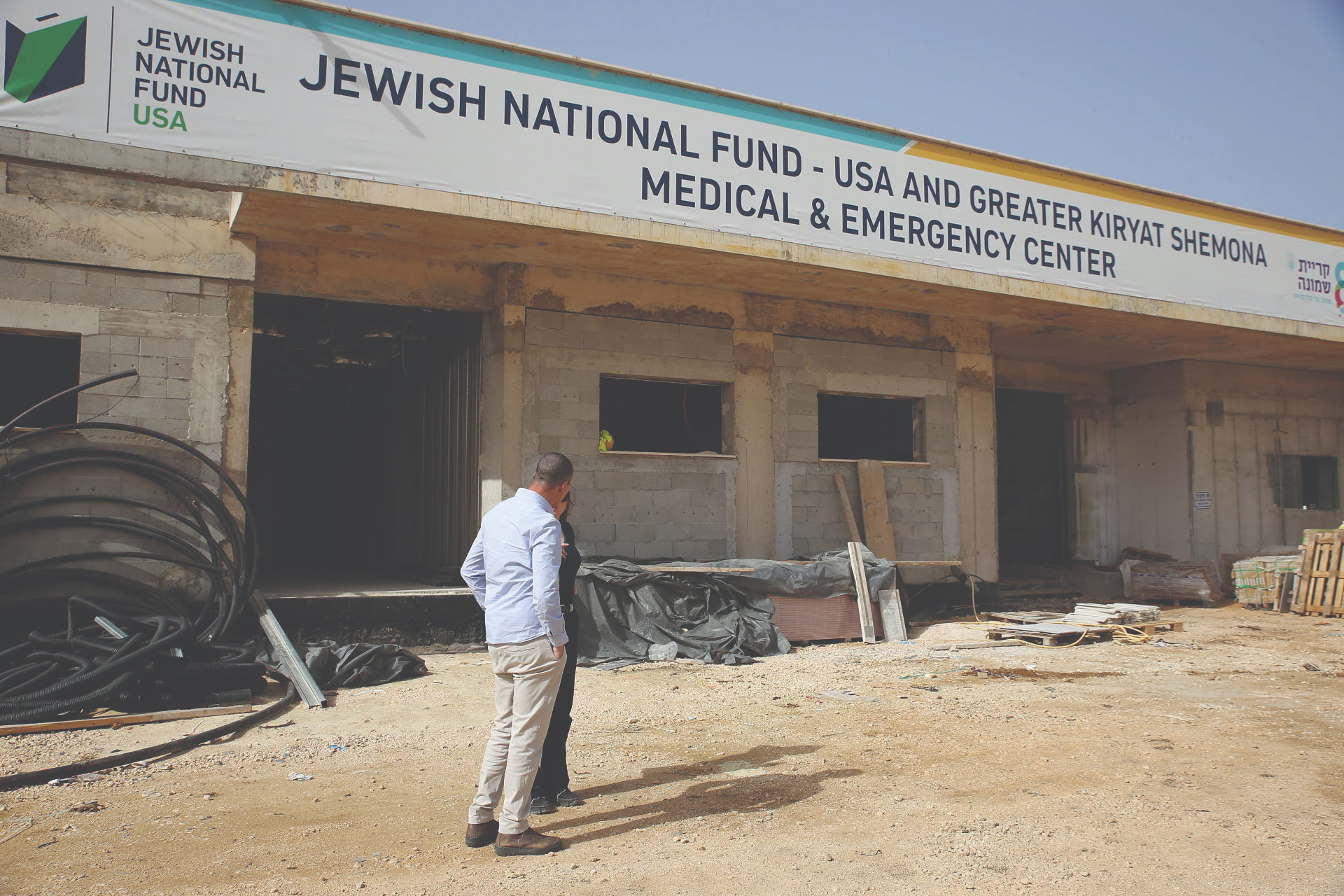
Jewish National Fund-USA’s Kiryat Shmona Medical & Emergency Center, currently under construction, will provide routine and urgent medical care to residents throughout the region
CHOOSING TO STAY
More than just physical shelter, Coten understands that building a life in Kiryat Shmona also depends on fostering community resilience—a core pillar of MAKOM’s mission. During the conflict with Iran, for example, Coten and members of his MAKOM community baked challah for Shabbat and delivered it throughout the city. Between the sirens, rockets, and falling debris, it was a small act that reassured new residents their neighbors were looking out for them in a time of fear and uncertainty.
Helping build resilience is a mission that Jewish National Fund-USA partners (donors) Sandy and Lorena Zatcoff are committed to supporting from afar. To stand with the families choosing to stay every day, the Zatcoffs generously funded a critical war room within the Kiryat Shmona Emergency Response Center.
“Our goal was to help provide some measure of safety and security for the brave Israelis who live so close to the Lebanese border,” Sandy says. “We wanted to support our Jewish brothers and sisters who are on the front lines, ensuring the survival of Israel.”
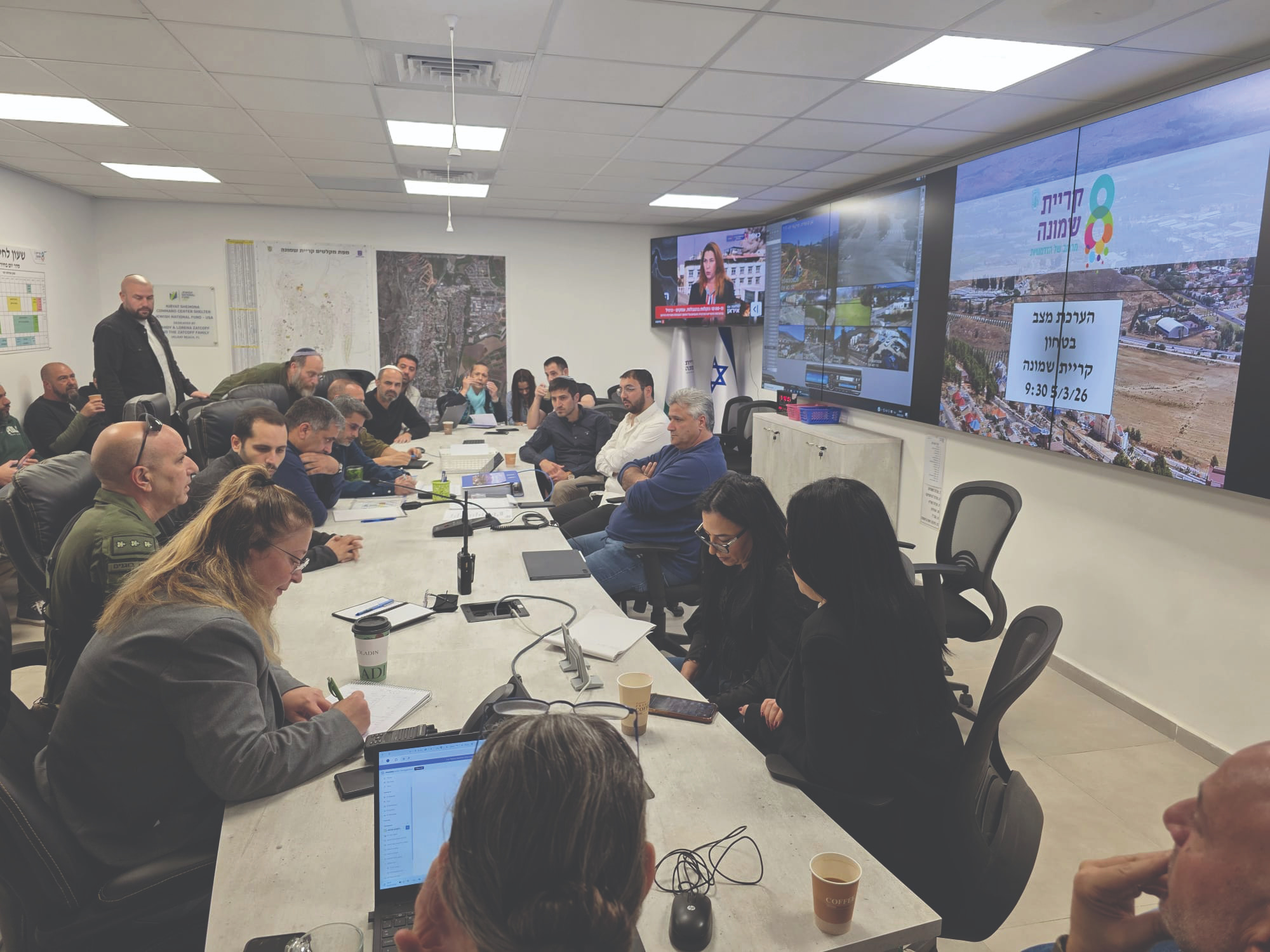 A gathering in the Zatcoff Command Center in the Kiryat Shmona Emergency Response Center
THE ARCHITECTURE OF RESILIENCE
Sandy and Lorena’s hope for the command center is to provide both physical shelter and psychological comfort for the families in the community.
“The people of Kiryat Shmona must know that they are not alone—that there are thousands of Jewish National Fund-USA supporters standing with them,” Sandy says.
Their commitment to supporting Israel’s border communities also extends to the South, where Sandy and Lorena are helping build a new command center in Nahal Oz, a kibbutz less than a mile from the Gaza border.
To Coten, support from Jewish National Fund-USA partners like the Zatcoffs, along with collaboration from local and national stakeholders, is essential to the future of Kiryat Shmona.
The first wave of families who moved with Coten was only the beginning. Through a milestone joint venture launched in May 2026 with the Ministry of the Negev and Galilee, MAKOM now has new support to help reach its goal of bringing 300 new families to Kiryat Shmona over 18 months, focusing on the populations the city needs most—doctors, teachers, public servants, artists, and more.
“This is a huge vote of confidence from the Israeli government, working hand-in-hand with us to improve the city,” Coten says.
Families are still arriving. Children are still playing in the streets between sirens. And parents are still making the same decision to build a life here, day after day.
“What defines our community is not just what it has been through, but what it chooses to do next,” Coten says. “And now, with the help of Jewish National Fund-USA and our municipal and national partners, we are building something together.”
This is our work in action. Help support the people of Israel when they need it most. Give at jnf.org/donate.
 Back
Back