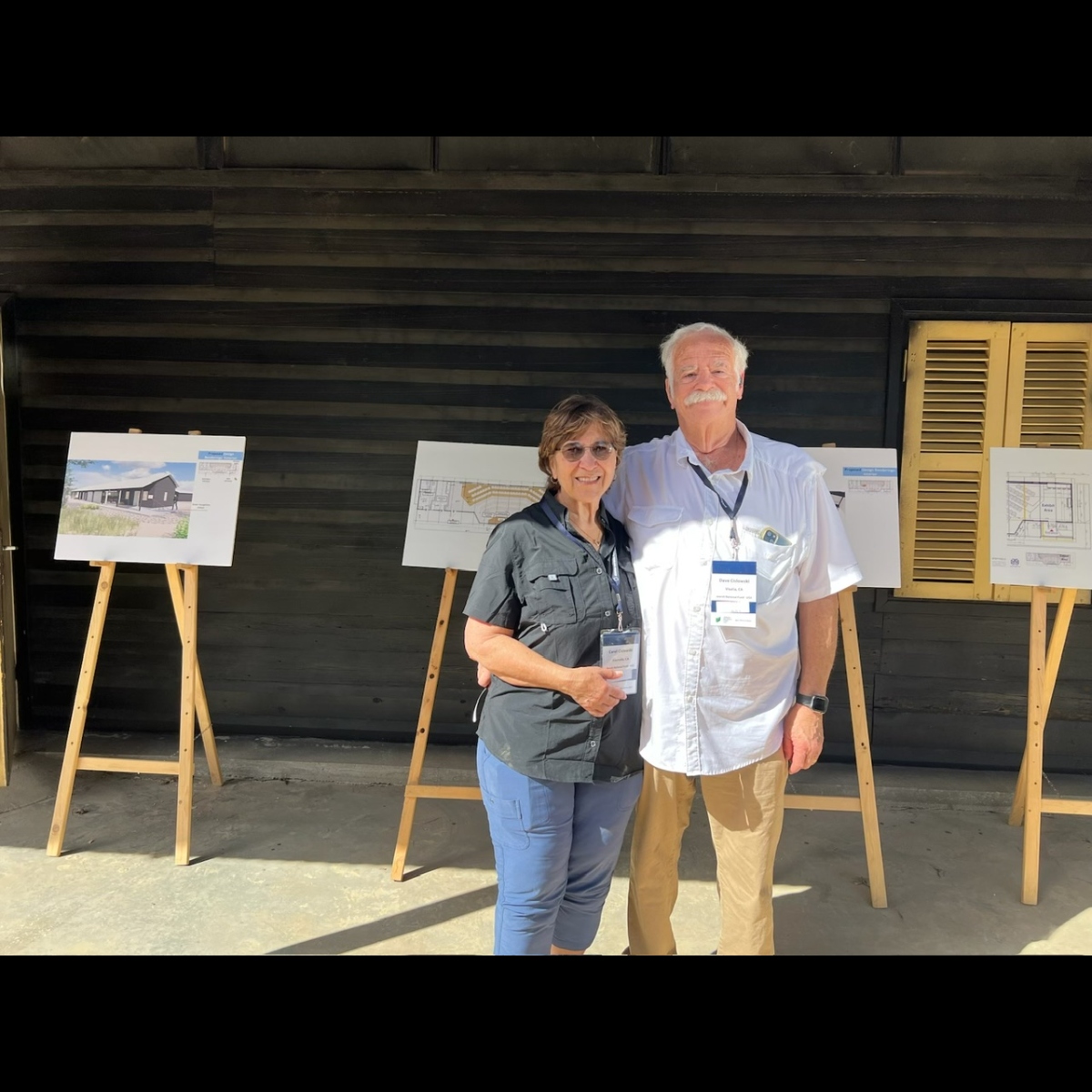
When Alameda philanthropist Dr. David Cislowski visited Israel’s historic Atlit Detention Camp, he stood in the same place where his father had arrived nearly 80 years earlier, a young Holocaust survivor with no parents beside him and no home to return to.
For much of his life, David had known little about that chapter of his father’s past. But through research conducted at Atlit, he uncovered new details about his father's journey to pre-state Israel, filling in gaps in a family history that had long remained a mystery.
In a remarkable full-circle moment, David is now helping preserve that history for others. As a major donor to a new auditorium at Atlit, a heritage site supported by Jewish National Fund-USA in partnership with the Society for Preservation of Israel Heritage Sites (SPIHS), he is helping ensure that future generations can discover the stories of those who passed through its gates.
“Atlit filled in so many gaps for me,” David said. “Suddenly, I was standing right where he stood.”
Located south of Haifa, Atlit was a British detention camp that held Jewish immigrants attempting to reach pre-state Israel, many of them Holocaust survivors. Today, the site preserves the history of clandestine Jewish immigration before Israel's independence, including the experiences of thousands who arrived seeking a new beginning.
For David, supporting the preservation of Atlit is a continuation of his family’s story.
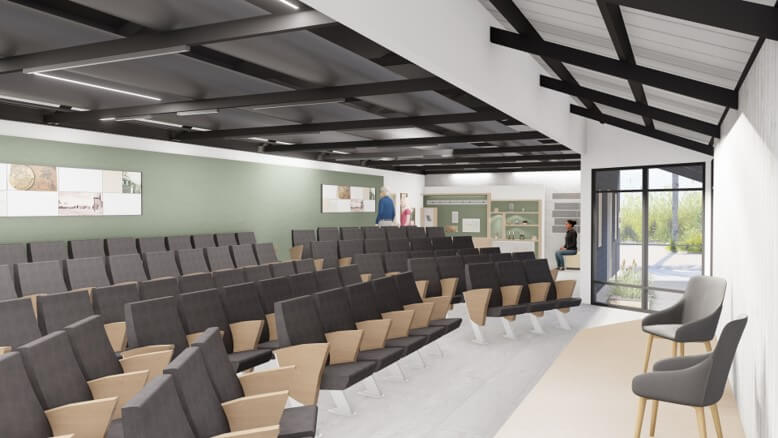
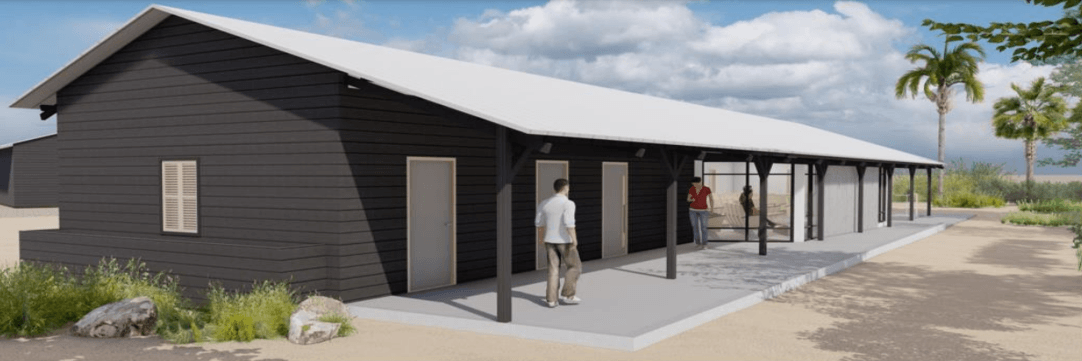
Renderings of the new Cyprus Hall Auditorium planned for Atlit Detention Camp
Uncovering a Father’s Past
David was born in Ra’anana, Israel, and moved with his family to Los Angeles when he was 7 years old. Growing up, David knew his parents were Holocaust survivors, but it would take many years before he fully understood what that meant.
Unlike his mother, who spoke more freely about the Holocaust, his father, Anczel, rarely spoke about those years.
“My dad was a small guy, five-foot-six, but he somehow survived it all,” David said. “I’m always in awe of his story.”
Late in life, Anczel dictated a memoir for his children, grandchildren, and great-grandchildren, The Survival Story of Anczel Cislowski, offering David his first glimpse into his father's experiences during the Holocaust. It was also the first time David heard of the Atlit Detention Camp.
After liberation, Anczel traveled through Italy and boarded a ship bound for pre-state Israel. But near the coast, British ships intercepted the vessel and took its passengers to Cyprus, where he spent months in detention before eventually reaching Atlit in 1947.
Along the way, he met three brothers aboard the ship who were also detained with him in Cyprus. He remembered seeing their sister there, Bela, although, amusingly, she had no recollection of seeing him. Later, after being released from Cyprus and Atlit, he visited the brothers in Tel Aviv and met her again.
Bela became his wife, and David’s mother.
Anczel also befriended another young Holocaust survivor, Joseph (Yosef) Birnberg, who had traveled alongside the three brothers. The brothers later introduced Joseph to their sister Fela, Bela's sister, whom he married. During his recent research at Atlit, David discovered records of Joseph's journey, revealing that he had been detained at Atlit after his release from Cyprus in March 1947.
David’s connections to Israel have remained strong over the years. He visits often and maintains close relationships with his cousins. The family ties that began in his father’s story are still very much part of his life.
Yet it was only through his experience at Atlit that David began to understand what that journey might have felt like for his father.
During a 2026 trip to Israel, David and his wife, Carol, visited the Atlit Information and Research Center, which preserves the stories and testimonies of 140,000 Jews who immigrated clandestinely to pre-state Israel by land, sea, and air in the years leading up to independence.
There, staff at the Information Center shared newly uncovered details about Anczel's ship and his journey to Israel—discoveries which helped fill gaps in David’s family history.
“I have never felt closer to my father as a young man than I did at Atlit.”
Inside the barracks, David imagined his father sleeping in a metal bed. At the disinfection showers, he wondered what his father might have feared after everything he had already endured. Inside the Galina ship exhibit, he could begin to picture the crowded voyage from Italy and the hopes of the people on board.
For a son who had grown up hearing so little about his father's experiences, the visit offered something extraordinary: a chance to connect with the young man his father had once been, long before he became a husband, father, and grandfather.
Preserving the Past for the Next Generation
For David, Atlit’s place in his family history might have remained a brief reference in a book. Instead, the opportunity to support Atlit became a way to preserve not only his father's story, but the experiences of an entire generation.
As part of a much larger effort to preserve the site, SPIHS and Jewish National Fund-USA are working to transform the historic Cyprus Hall barrack into an accessible, climate-controlled auditorium where visiting groups can gather, learn about the struggle to reach Israel, and hear the personal stories behind that history.
David became one of the project’s major donors, helping make that vision possible.
For him, the significance extends far beyond his own family's history. Thousands of visitors pass through Atlit each month, including Israeli schoolchildren; students at Muss High School Israel, Jewish National Fund-USA’s premier study abroad program; and American teenagers on gap year programs.
“We really connect to education causes,” David said.
David hopes that young visitors will come away with the same sense of connection he experienced: a deeper understanding of the people who survived unimaginable hardship and went on to help build the State of Israel.
Recently, during the conflict with Iran, David and Carol made yet another contribution to Atlit: a bomb shelter that allowed employees to return to work and visitors to continue learning about the site’s history.
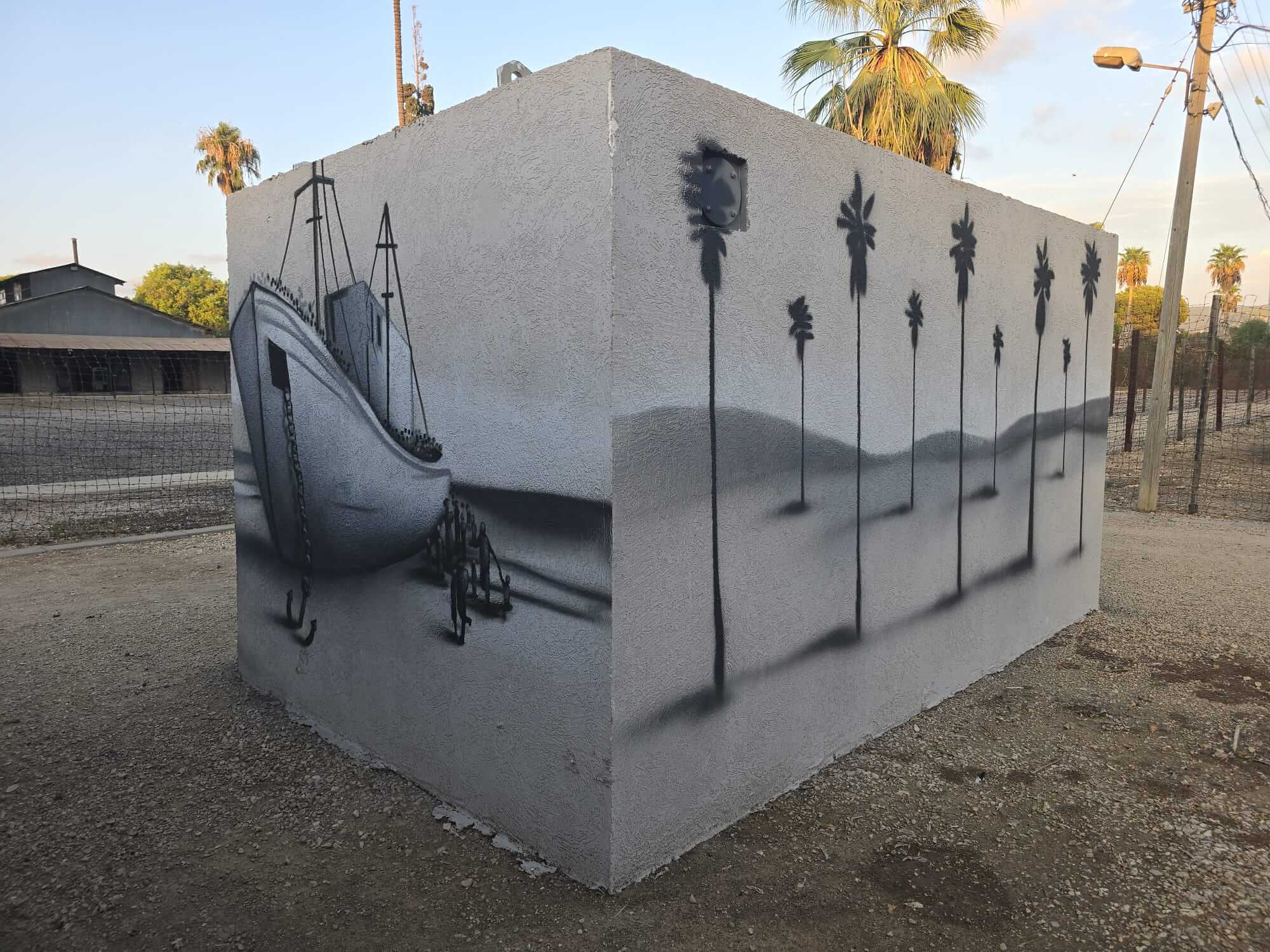
The bomb shelter outside Atlit donated by David and Carol Cislowski
Planting Seeds for Tomorrow
David's support of Jewish National Fund-USA's work at Atlit reflects a belief that preserving the past is an investment in the future.
To explain why he gives, David recalled a story about a man planting a sapling outside his house. People asked why he bothered; he would never live long enough to enjoy its fruit or sit beneath its shade.
The man explained that he was planting it for the next generation that would live there.
That is how David thinks about his support for Atlit. The people who benefit may be children he will never meet, but he wants them to have the opportunity to understand their history and feel secure in their identity as Jews.
His father had lived long enough to tell his story to his descendants. Now, David is helping ensure that stories like his can reach future generations, preserving the memory of those who survived the Holocaust and helped build the State of Israel.
Asked what his father, who passed away in 2021, would say about his efforts, David became tearful. He choked up before answering:
“I think he’d be very, very proud.”